Custom models and integrations that live inside the tools your team already opens every day.
Custom AI model development, from a New York team. A model on its own is a demo. What makes it useful is where it sits. PackShip's packing solver runs on the phone, so choosing a box never waits on a server; the dimension lookup is a server call with a seven-day cache and a confidence gate.
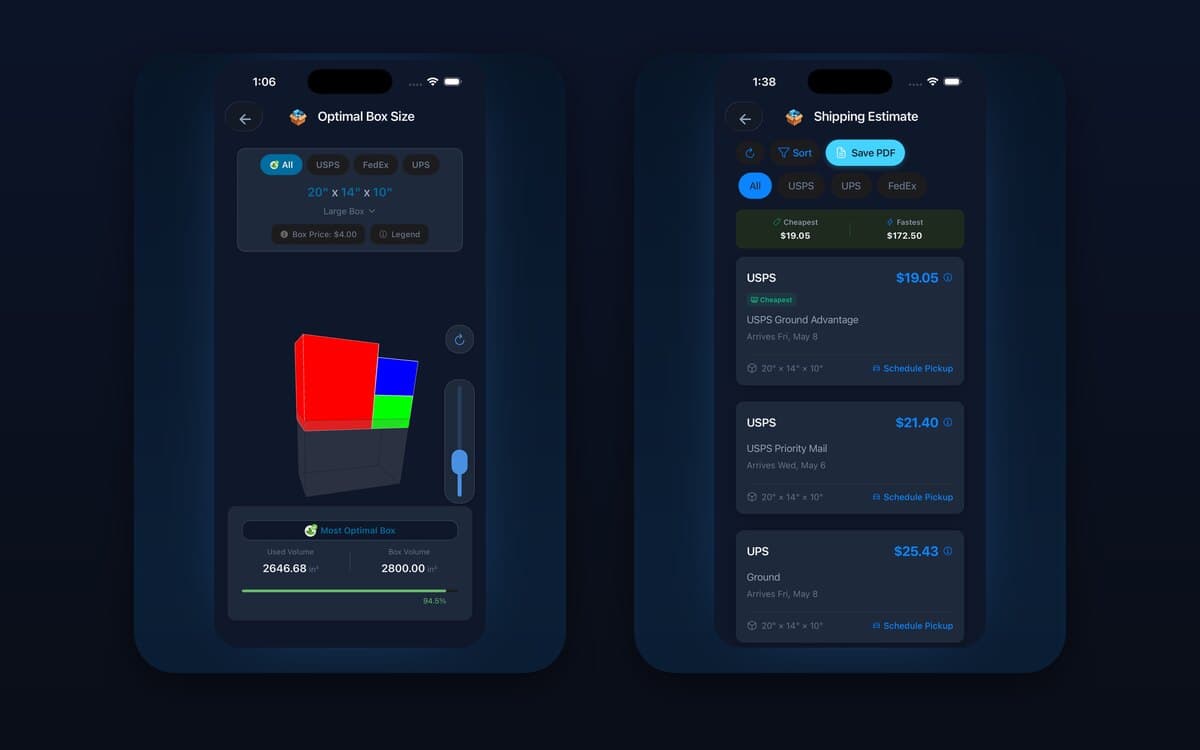
Measuring is ARKit with the LiDAR scanner on Pro iPhones; the lookup by name or photo comes back with a confidence level, and anything below medium is refused. From there a live 3D scene fits the items into the smallest carrier box while you watch, and UPS, FedEx and USPS rates are fetched in parallel and listed cheapest first.
The integration work is the unglamorous half and it is most of the job. React Native on the front, an Express backend on Railway with Postgres and Redis behind it, a 15-minute Redis cache on every rate quote, and a stack your team can hire for. The code is clean and documented, and it is yours to take over whenever you want it.
Workflow
How a custom model ends up in daily useHow we work
PackShip, layer by layer
On the device:
The packing solver: 149 boxes, envelopes and mailers across USPS, FedEx, UPS and retail sizes, six item orderings by six rotations, first fit wins, all on the phone, with 18 of the app's 31 Jest test files on the solver. Measuring is ARKit with the LiDAR scanner.
Three.js in React Native:
A live 3D scene draws the chosen box with the used volume against the box volume. Rotate it. Swap the box or the carrier and it re-packs.
Carrier APIs on Redis:
UPS, FedEx and USPS rates are fetched in parallel through the backend, cached in Redis for 15 minutes on the exact box and route, and listed cheapest first with the cheapest and the fastest marked.
Where it ended up:
Live on the App Store as a consumer product, at version 1.2.0: measure or look up the item, get the smallest box that fits, see three carriers' rates on one screen.
Shaped around how you already work
You're sitting on data or a manual process, and you want a working result you can point at.
What integration means here
Software shaped around how your business already works, built to survive the next three years of it. Discovery maps the real problem before we write any code. What comes out is clean, documented code your team can take over whenever they want it, and support after launch for as long as you need us.
The stack, so you can hire for it
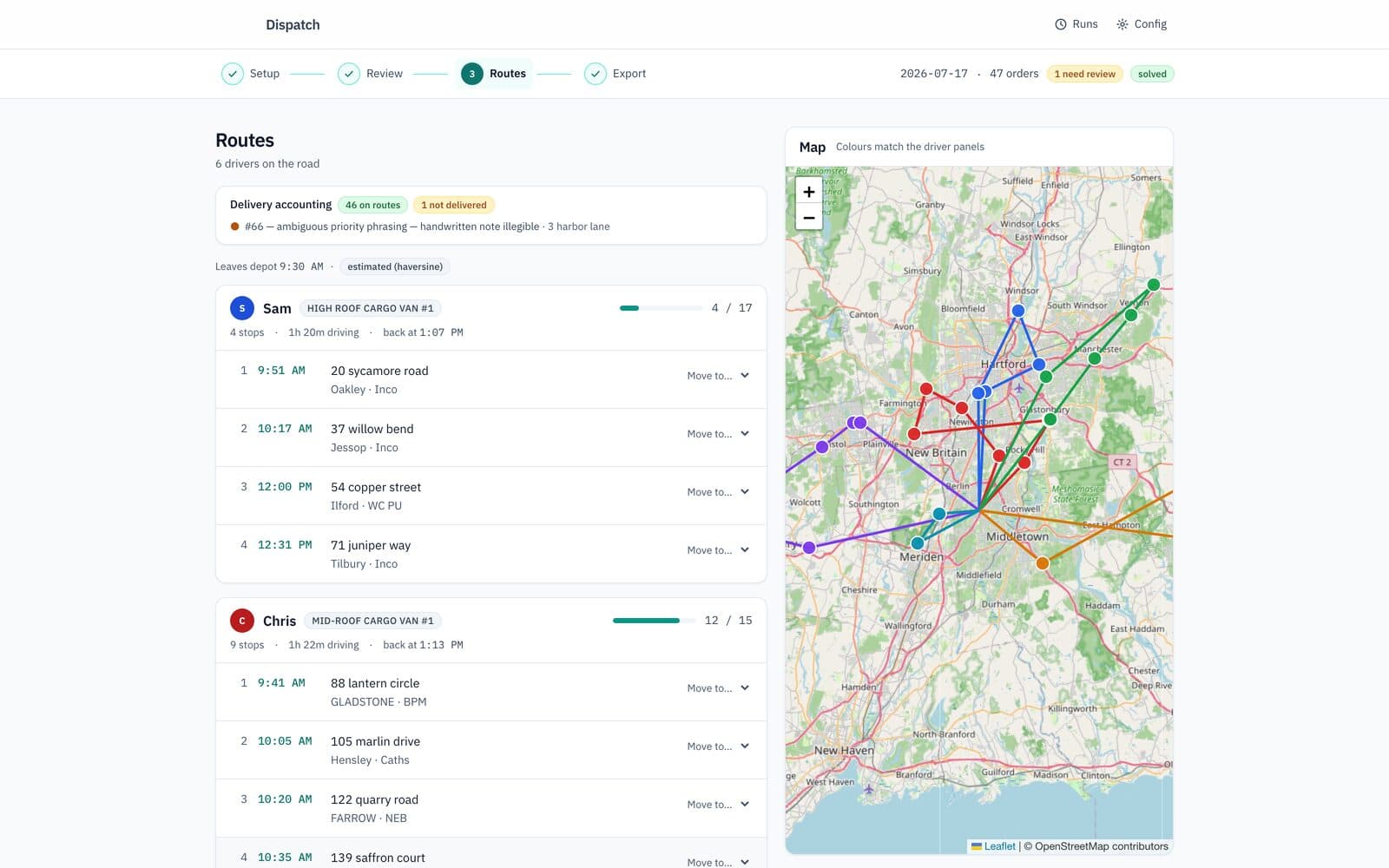
React Native and TypeScript on the phone. Postgres and Redis behind it. Python, FastAPI, and OR-Tools where the maths lives, React and TypeScript where somebody has to look at the result. Nothing exotic, because you will be hiring against it after we hand over.
Where this shipped
Want a model inside the tool your team already uses?