A straight answer about where AI helps you and where it would be theatre. That answer is free, and it is sometimes no.
AI strategy consulting, from a team in New York that also writes the code. Most of what gets sold as AI strategy is a deck. What you get from us is half an hour on a call, a lot of questions about what the problem is actually costing you, and then either a written scope with a fixed price and a date, or a no. If we don't think we can help, we'll tell you on that call and try to point you at someone who can.
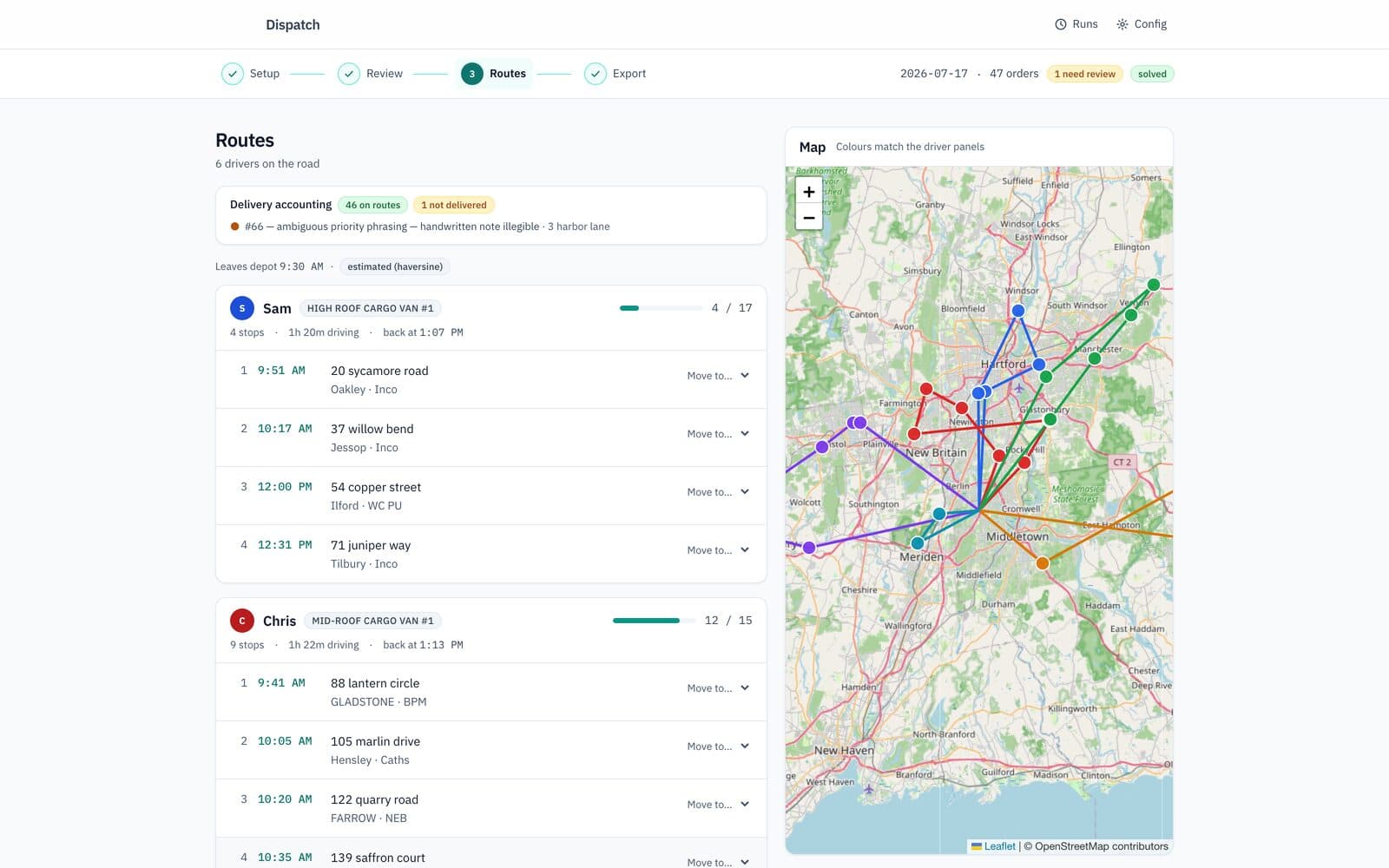
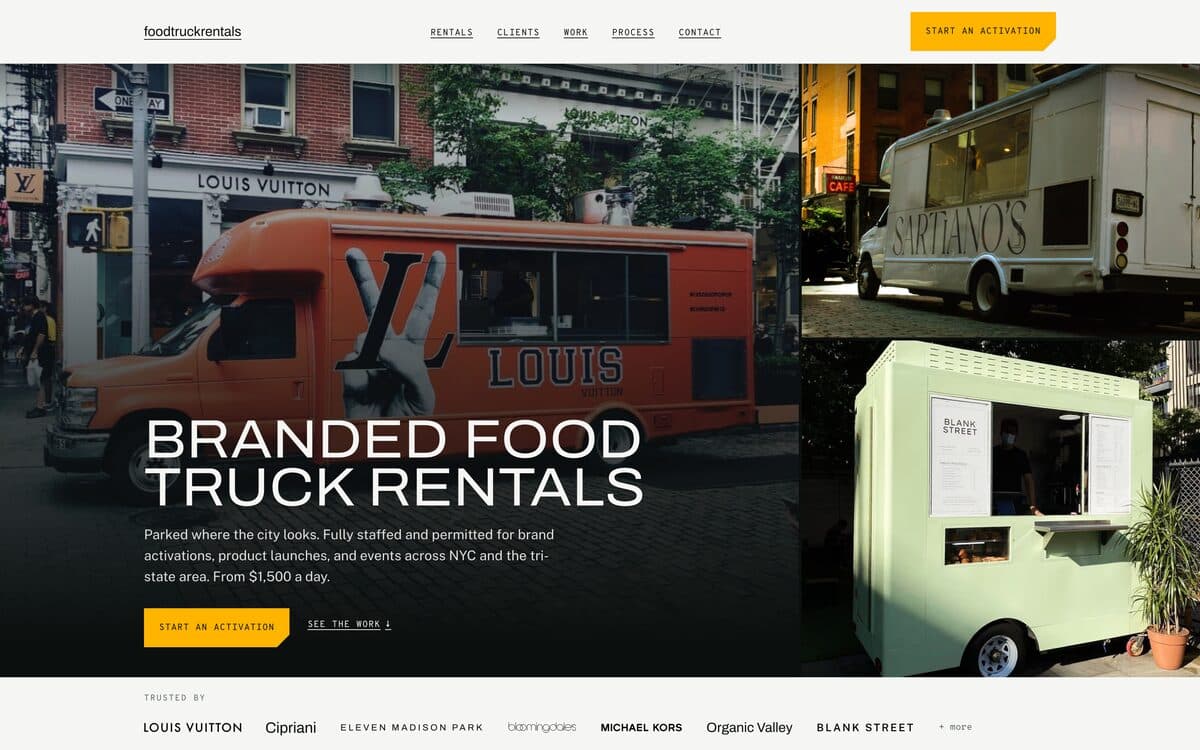
The test we apply is whether there is one number somebody is already tracking. A home medical equipment provider had a dispatcher planning six vans by hand every morning from a messy export of the day's tickets. That is a measurable problem, and a solver fixed it. A brand-activation company selling wrapped food trucks to fashion houses had no website of its own, which is a different problem, and the answer there was 24 pages of Next.js with keyword research under the URL structure and no model anywhere in it.
Where the answer is yes, the work goes inside the tools your team already opens every day. A system nobody opens is a system nobody uses, and we would rather say that before you pay for it than after.
Workflow
How we decide whether AI is the answerHow we work
Three calls we have actually made
A manual operation with rules in one person's head:
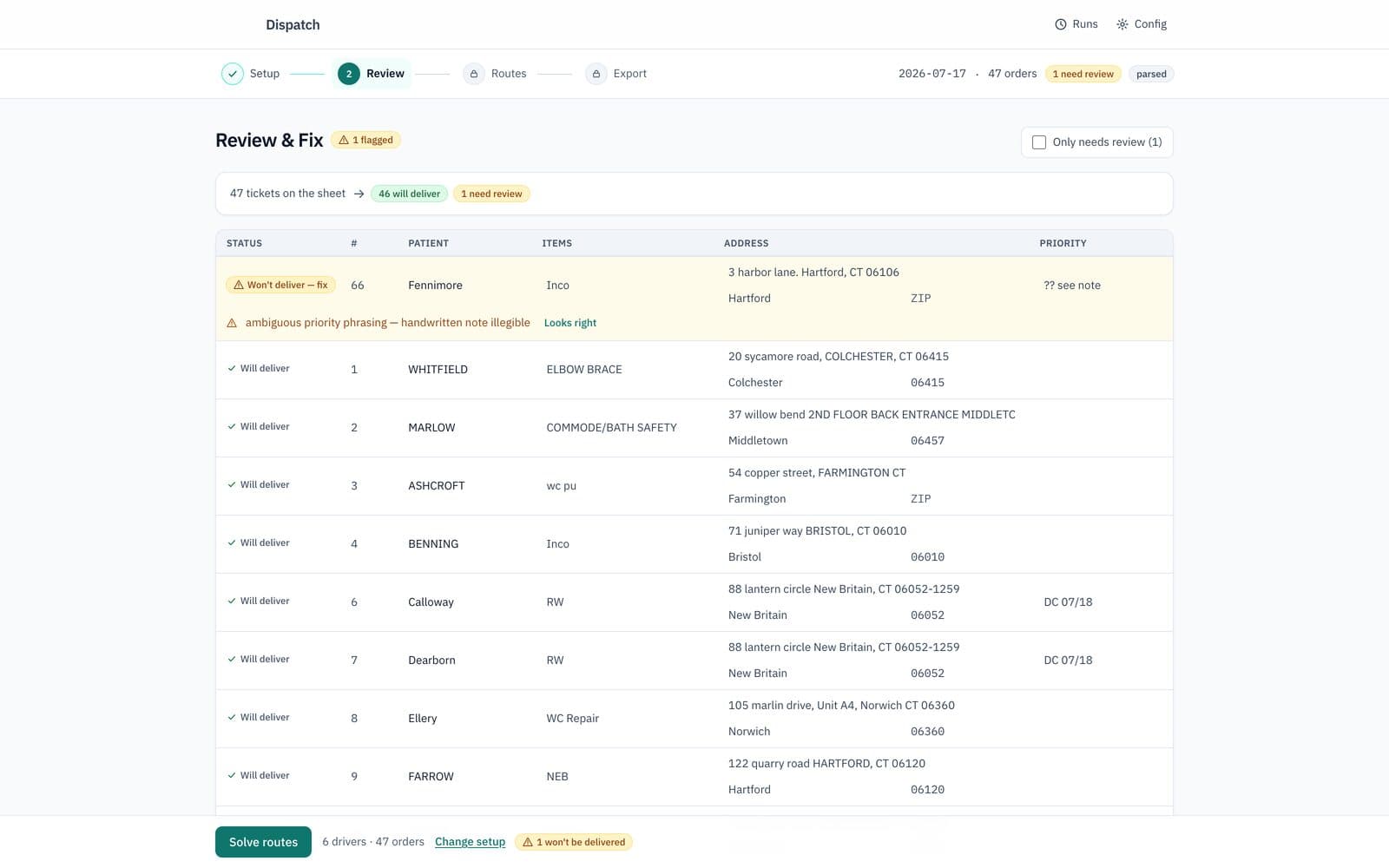
A home medical equipment provider planned every delivery day by hand. One dispatcher, six vans, and a yard full of drivers waiting to leave. Per-driver caps, town bans, delivery windows, driver and vehicle eligibility, all of it carried between somebody's ears. That is a yes.
A chore with a model-shaped hole in it:
Shipping a parcel means guessing three things at once: which box, what it will cost, which carrier. PackShip answers all three from a name, a photo or a LiDAR scan, with the packing solver running on the phone and the lookup behind a confidence gate. Also a yes.
A problem AI would only decorate:
A brand-activation company was wrapping, staffing, and permitting food trucks for fashion houses and selling all of it without a website. The fix was 24 pages, one page allowed to own the New York query, and 141 tests holding it in place. No model would have rented a single truck.
A result you can point at
You're sitting on data or a manual process, and you want a working result you can point at.
What the first call costs
Nothing. We read every message and we answer all of them, including the ones we turn down. If we're the wrong fit for your project we'll usually know within a day, and we'll say so.
Who is doing the work
NeuraGul is a team of developers, designers and engineers working out of New York. The people who scope your project are the people who write it, so you always know who is on it. The same people are still reachable six months after launch.
Where this shipped
Delivery routing platform
2026 · Web app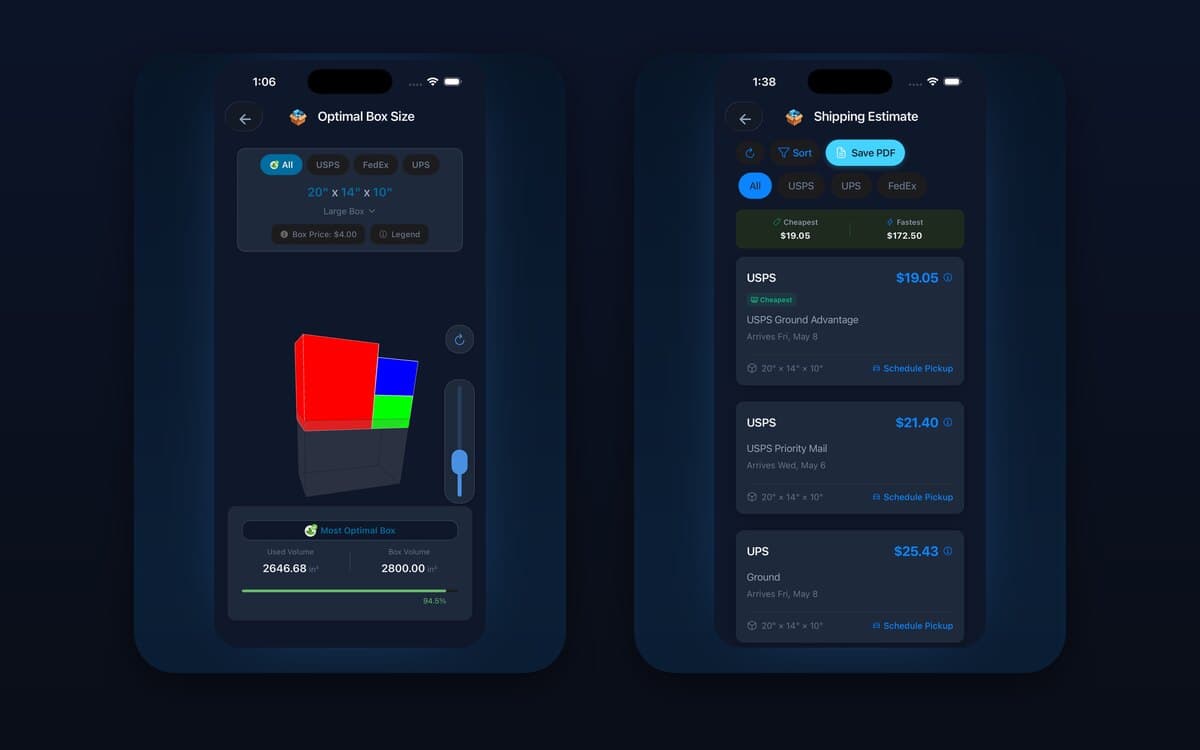
Not sure whether AI would help you or just cost you?