Data Intelligence
Pipelines, dashboards, and migrations that turn a pile of data into a decision.
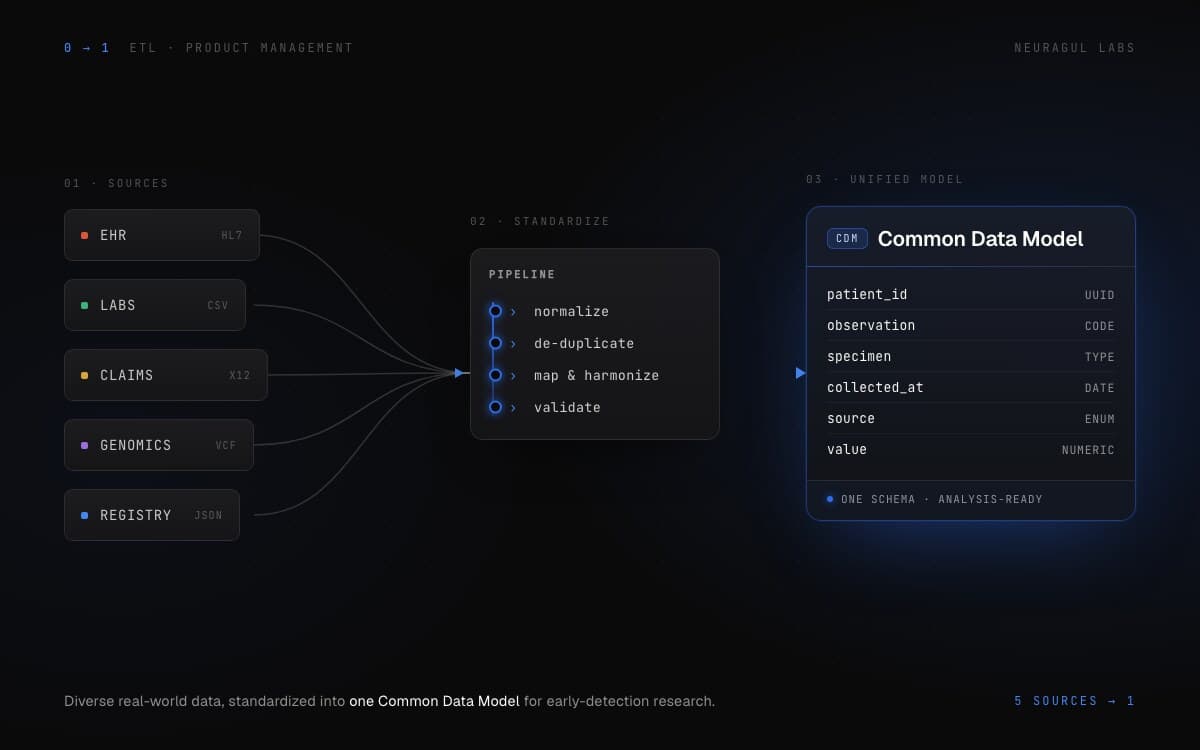
We do data engineering out of New York: ETL pipelines, dashboards, and the database migrations underneath them. Before NeuraGul, Hamad Gul was a product manager at Freenome, leading a 0-to-1 ETL pipeline that pulled messy real-world clinical data from dozens of sources into a single Common Data Model. Early cancer detection research was built on that foundation, and the pipeline went from concept to production.
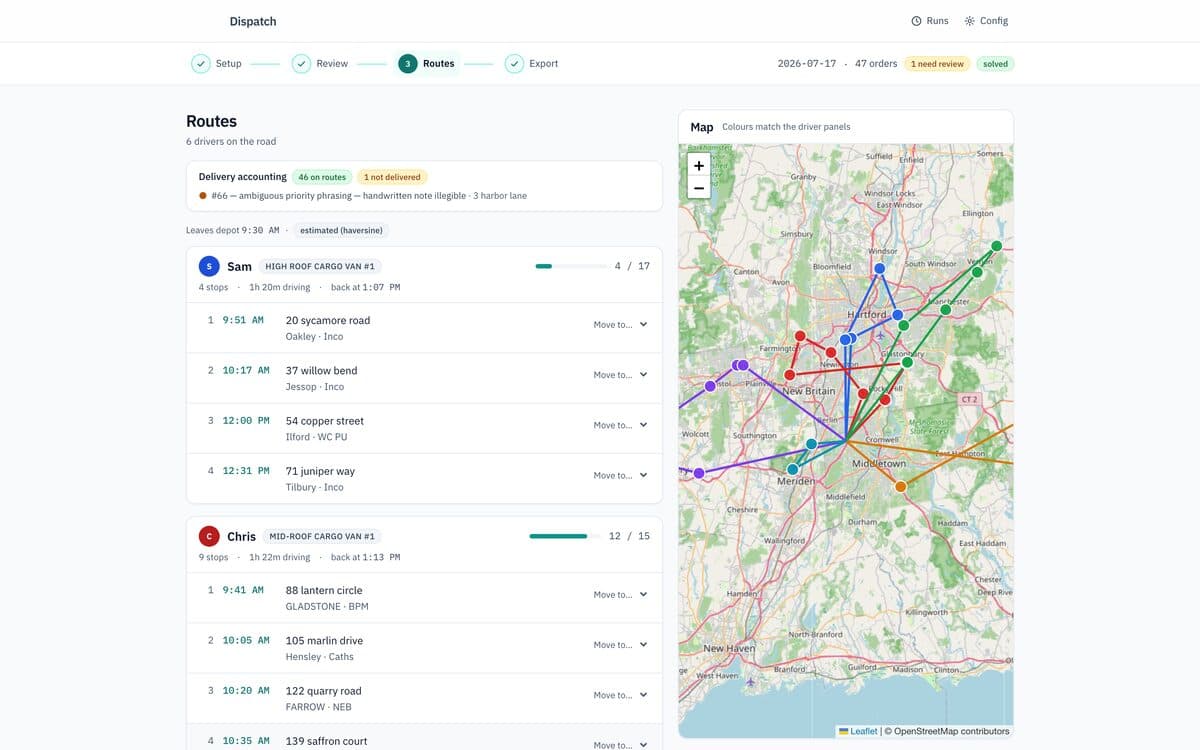
The same discipline shows up at a much smaller scale. The delivery routing platform parses a messy delivery log and refuses to invent anything it cannot read with confidence; an unreadable row becomes a flagged task for a human rather than a quietly wrong address on a driver's sheet. Geocoding fails closed for the same reason. 1,278 tests cover the rules.
What comes out the other end is whatever the office actually opens. On that project it is a printed cut sheet designed for a clipboard and a pen, plus an Excel and CSV log. Dashboards your team will open more than once, and reporting that answers the question you actually asked.
Deliverables
You're sitting on data that nobody has been able to turn into an answer.What you get
What we build with data
ETL pipelines:
The 0-to-1 pipeline Hamad led at Freenome standardized real-world clinical data from dozens of sources into one Common Data Model, taken from concept to production.
Parsing that fails closed:
The routing platform refuses to invent anything it cannot read with confidence. An unreadable row becomes a flagged task for a human.
Rules engines:
Per-driver caps, town bans, delivery windows, driver and vehicle eligibility. Every rule a dispatcher used to carry in their head, with 1,278 tests covering them.
Exports and reporting:
Printable driver cut sheets for the van, Excel and CSV for the office, and a solved route somebody can hand to a driver at seven in the morning.
Generated structured data:
On Food Truck Rentals, JSON-LD Service, FAQ and LocalBusiness data generated from a single pricing module, so a published price can never drift away from the page it sits on.
Why it survives real data
It says what it does not know:
A confidence threshold and a flagged human task beat a plausible guess. Geocoding fails closed rather than inventing an address.
The rules are tested:
1,278 tests cover the routing rules, so changing one of them cannot quietly break another six weeks later.
Output lands where the work happens:
A clipboard in a van, a spreadsheet in the office, a structured block on a web page. The format follows whoever has to act on it.
We stay on after launch:
We hold the pager, fix what breaks, and hand over once your team wants it. The same people are still reachable six months after launch.
Where this shipped